Israel agrees to reopen Rafah crossing for Gaza pedestrians, contingent on hostage recovery
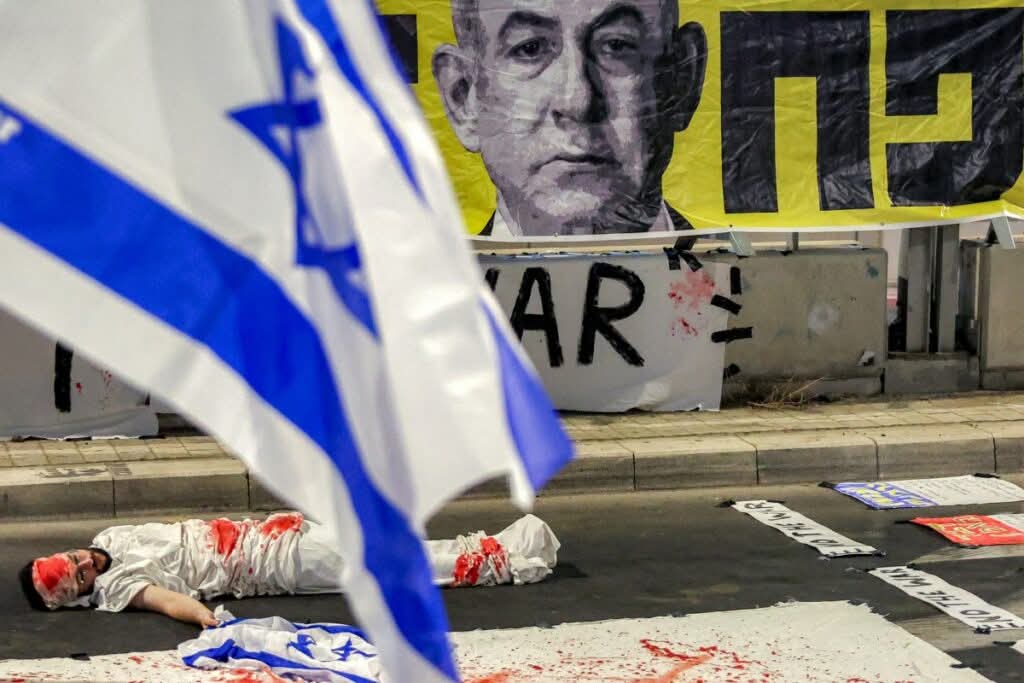
A demonstrator lies on the ground while depicting an Israeli hostage during an anti-government protest organised by the families of the Israeli hostages taken captive in the Gaza Strip since the October 2023 calling for action to secure their release and a ceasefire in the war against Hamas outside the Defence Ministry headquarters in Tel Aviv on August 23, 2025. (Photo by Jack GUEZ / AFP)
Rafah, Gaza Strip — Israel has agreed to reopen the Rafah border crossing between Gaza and Egypt for pedestrian travel only, marking a limited easing of restrictions on one of Gaza’s most critical gateways to the outside world. The reopening, however, is conditional on the recovery of the remains of the last Israeli hostage believed to be held in the Gaza Strip, Israeli officials said.
According to Israeli authorities, the crossing will initially allow only foot traffic, excluding vehicles, commercial goods, or cargo shipments. The move follows intense diplomatic efforts linked to a broader ceasefire framework and negotiations mediated by international actors.
Israeli officials said the decision will take effect after the Israeli military completes its search for the remains of Master Sgt. Ran Gvili, the last Israeli hostage unaccounted for following the October 7, 2023 Hamas-led attack on southern Israel. Once that operation concludes, preparations to reopen the crossing for civilian movement are expected to begin .
The Rafah crossing, Gaza’s sole exit point not directly controlled by Israel, has been largely closed for months, leaving more than two million Palestinians with severely restricted freedom of movement. Its partial reopening is expected to allow civilians, including those with foreign residency or urgent humanitarian needs, to cross into Egypt, though exact eligibility criteria have not yet been publicly detailed .
Egyptian and international officials have welcomed the decision cautiously, describing it as a limited but significant step toward alleviating humanitarian pressure in Gaza. However, humanitarian organizations have noted that reopening the crossing to pedestrians alone will not address the urgent need for expanded aid deliveries and medical evacuations.
Within Israel, the move has sparked debate among political and security officials, with some arguing that reopening Rafah before all hostage-related issues are fully resolved could pose security risks. Others say the step is necessary to maintain diplomatic momentum and uphold ceasefire commitments .
No specific date has been announced for the reopening, and Israeli authorities said further coordination with Egypt and international monitors would be required before pedestrian movement resumes.
The Rafah crossing has long been a focal point in Gaza ceasefire negotiations, symbolizing both humanitarian access and regional security concerns, and its limited reopening underscores the fragile balance between diplomacy and ongoing tensions in the region.